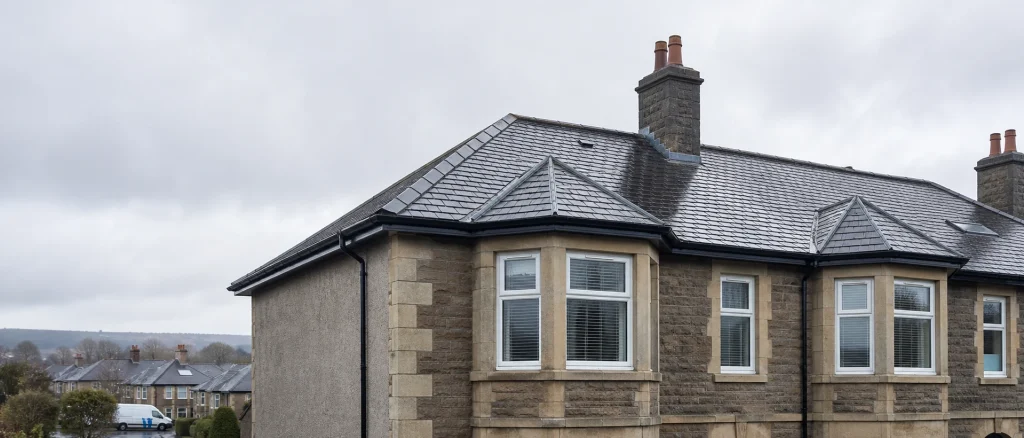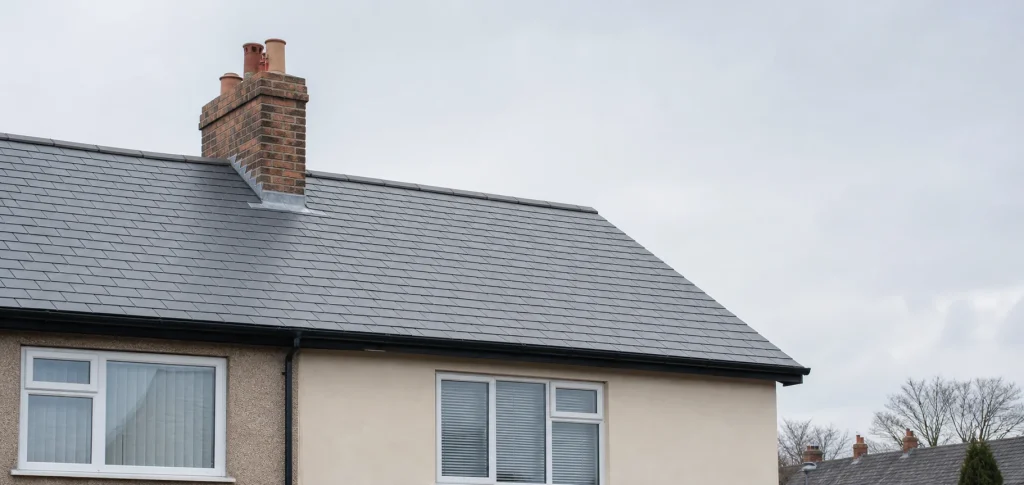
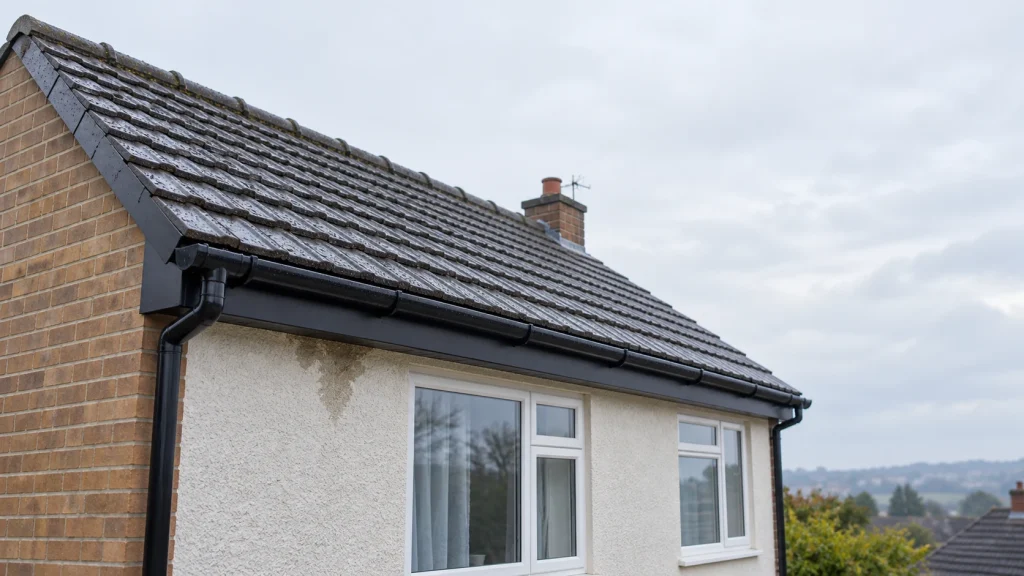
A roof leak is not always coming from the place where water first appears inside the home. A damp patch near an upstairs ceiling, a stain by a window or moisture in a loft can all point to one area, while the real entry point sits several metres away.
Gutters are one of the most common reasons for that confusion. When rainwater cannot leave the roof cleanly, it can travel backwards, sideways or behind roof edges before it finally shows itself indoors. That is why a proper inspection often looks beyond broken tiles and checks the full route water is taking.
How gutters affect the edge of the roof
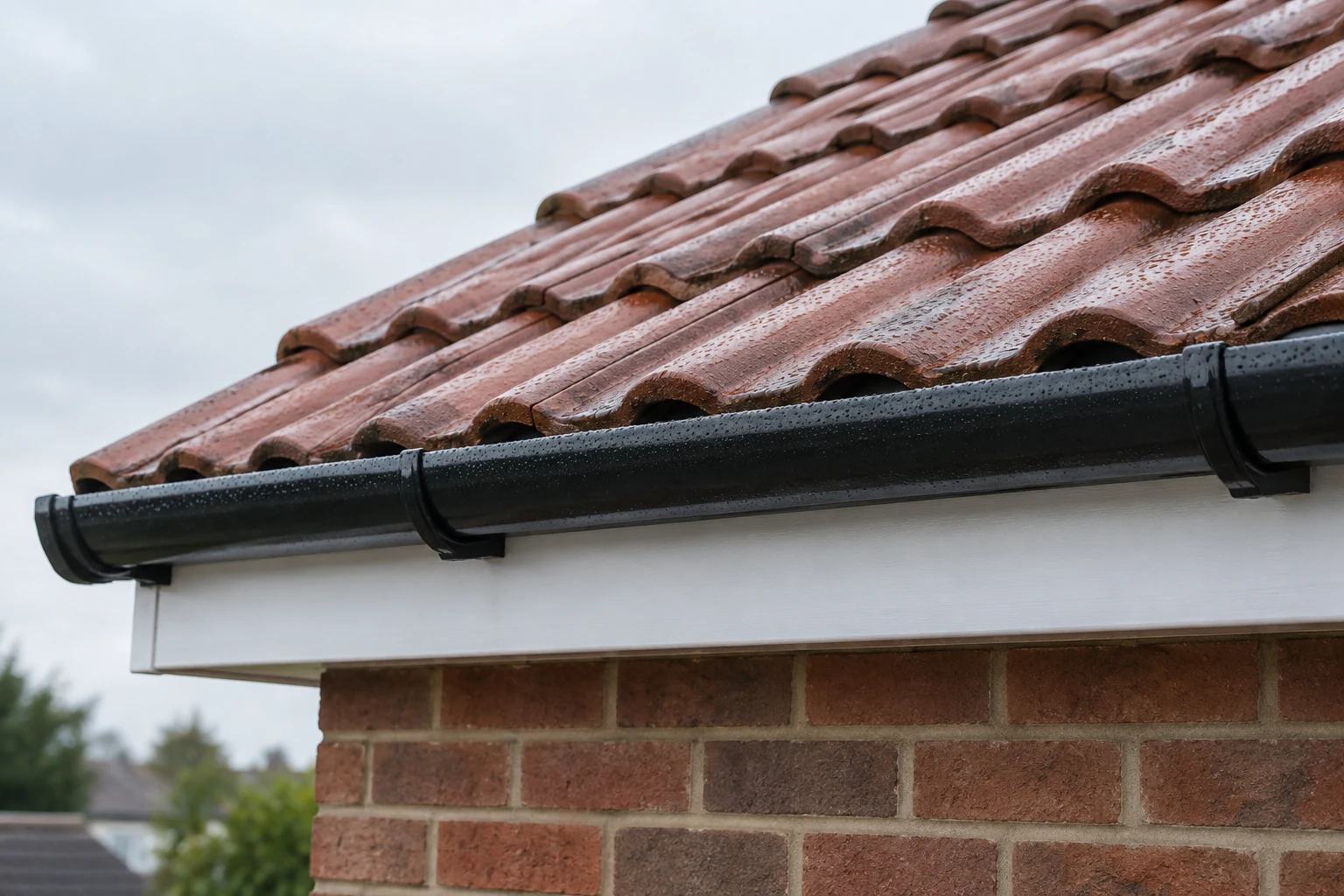
Gutters sit at the point where the roof should hand water over to the drainage system. On a pitched roof, rain should run down the tiles or slates, pass over the lower edge and drop into the gutter. When that handover works properly, the roof covering, underlay, fascia and wall below are all protected from regular soaking.
Problems begin when the gutter is blocked, sagging, too shallow, badly aligned or pulling away from the fascia. Instead of flowing along the gutter and into the outlet, water can spill over the front, creep over the back or sit against the lower roof edge. In heavy rain, even a small restriction can send water where it was never meant to go.
This matters because the bottom edge of a roof contains several parts working together. The last row of tiles or slates, the underlay, battens, felt support tray, fascia, soffit and gutter all meet in a narrow area. If water repeatedly collects there, it can find weaknesses that are not obvious from ground level.
For example, an older underlay may have become brittle near the eaves. A tile may still look in place, but the felt underneath may no longer guide stray water into the gutter. A gutter that overflows at the same point during storms can then push water into the roof edge, making the leak appear more like a roof covering fault than a drainage issue.
Why water rarely travels in a straight line
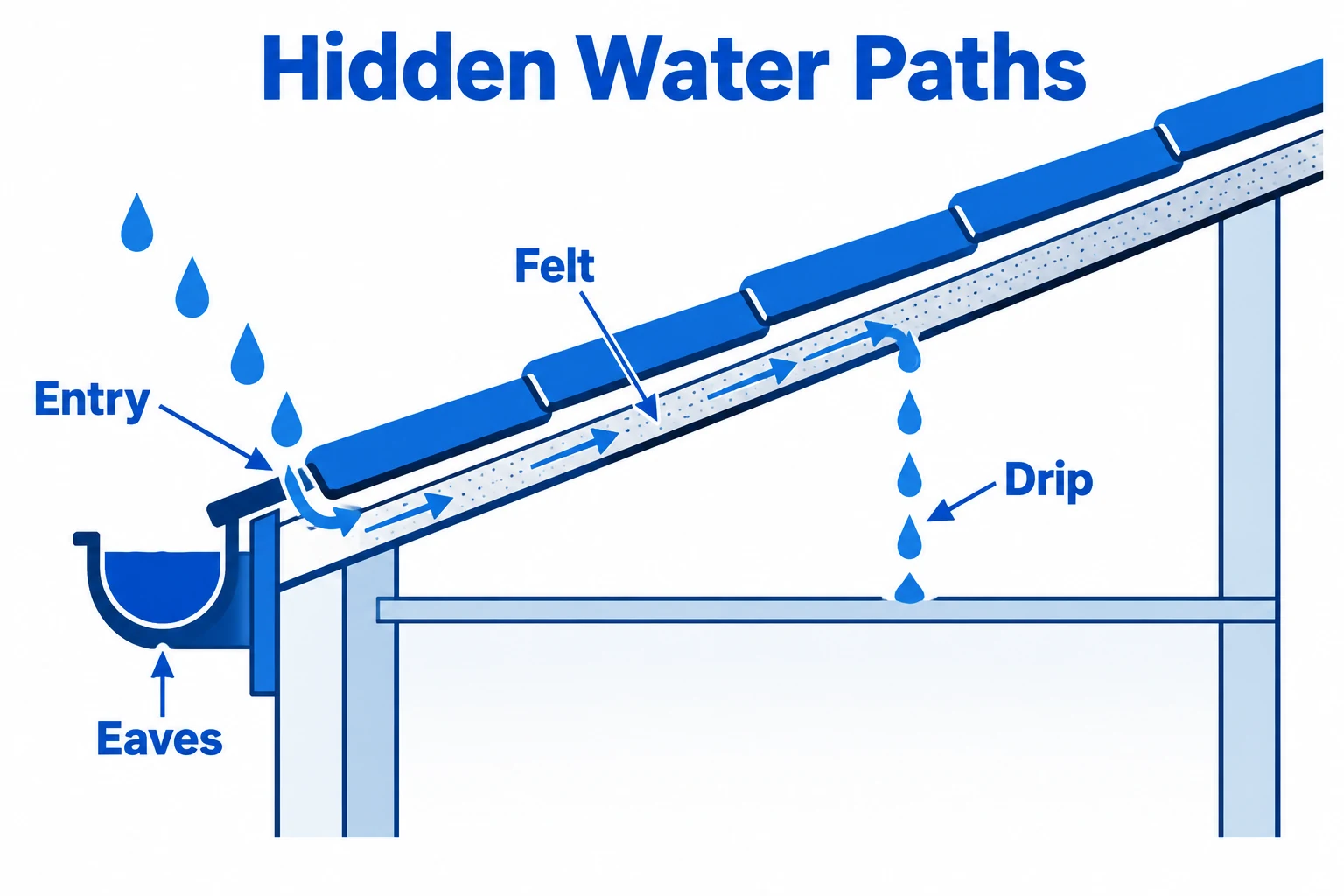
One reason leaks are difficult to diagnose is that water follows gravity, surface tension and the easiest available route. It may enter through a small gap near the edge, track along felt, run down a rafter, follow a cable or collect on top of insulation before it becomes visible.
This is why the visible stain inside the house is only a clue. It is useful, but it is not proof of the exact defect. A ceiling mark near the outside wall may be linked to a gutter issue, but it could also involve slipped tiles, damaged underlay, loose flashing or poor detailing around the roof edge.
Water can also move differently depending on wind direction and rainfall. A roof might stay dry during light rain, then leak during wind driven rain because water is blown under a tile or against a gutter joint. The same property may show no problem for weeks, then produce a sudden damp patch after a storm.
That is why experienced roofers often look for patterns rather than one isolated symptom. They may check the gutter fall, outlets, joints, brackets, fascia condition, tile alignment, roof felt, verge details and nearby penetrations. If tiles have moved, the causes can vary, and guides such as what causes roof tiles to slip or fall off can help homeowners understand why one visible defect may have several possible roots.
Gutter faults that can imitate roof leaks
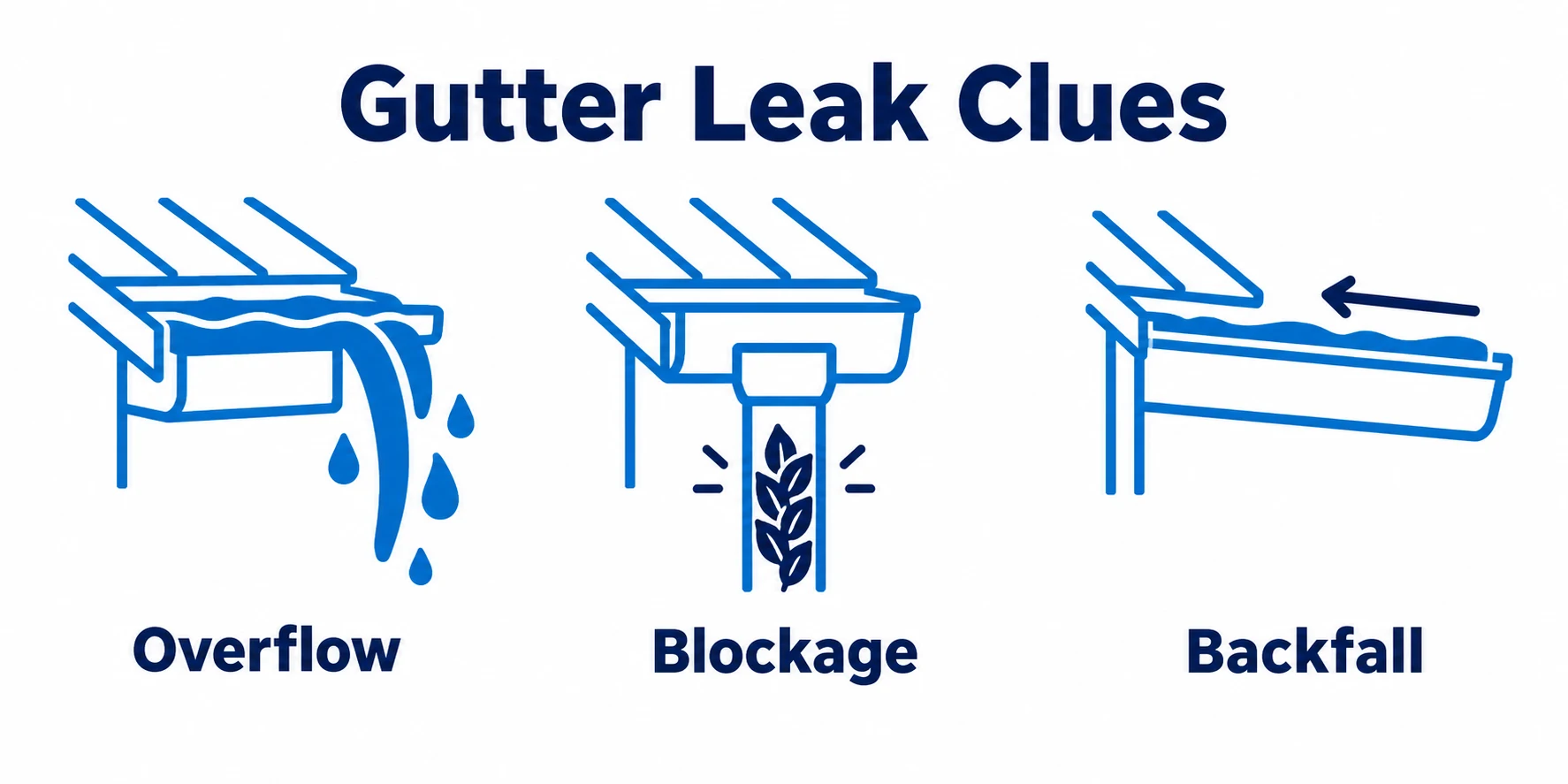
Some gutter problems are easy to spot, such as plants growing from the trough or water pouring over one section during rain. Others are more subtle. A gutter can look clear from below but still have a poor fall, a hidden blockage near the outlet or a joint that only leaks when the water level rises.
Common gutter related causes of confusing leaks include:
- Blocked outlets that make water back up along the gutter run.
- Sagging sections that hold standing water after rain.
- Loose brackets that allow the gutter to tilt towards the roof edge.
- Cracked joints that leak onto fascia boards or brickwork.
- Undersized or poorly positioned gutters that overflow in heavy rain.
- Debris at roof valleys that sends extra water into one small section.
Any of these can make it seem as though the roof covering itself has failed. The homeowner may notice damp at the top of a wall, staining near a corner or moisture in the loft at the eaves. Yet the original trigger may be water sitting in the wrong place because the gutter is not carrying it away fast enough.
This does not mean the gutter is always the only fault. Long standing overflow can damage timber, encourage decay, wet insulation and expose weaknesses in old felt or roof detailing. By the time a leak is noticed indoors, both the gutter and the roof edge may need attention. A useful roof repairs inspection should therefore consider the drainage route as well as the obvious roof surface.
Why chimney areas and roof edges can confuse the diagnosis
Gutters are not the only place where water can be misleading. Chimneys, abutments, valleys and roof edges all interrupt the main flow of rainwater. Where water is slowed down, redirected or concentrated, small defects can become harder to trace.
Chimney flashing is a good example. Water may enter around the base of a chimney, then travel across timbers or under felt before appearing closer to the outer wall. At the same time, a nearby gutter overflow may be soaking the eaves. Without a careful inspection, it is easy to blame the wrong part of the roof.
The same applies where a roof meets a wall, a dormer or a change in pitch. Rainwater does not politely label the route it has taken. It may pass through one defect, then show up somewhere that looks unrelated. If more than one weakness exists, diagnosis becomes even less straightforward.
Homeowners who want to understand this wider picture may find it helpful to compare gutter related symptoms with chimney flashing faults that cause roof leaks. Both issues show why roof leaks are often about water movement rather than a single broken component.
What a sensible leak inspection should include
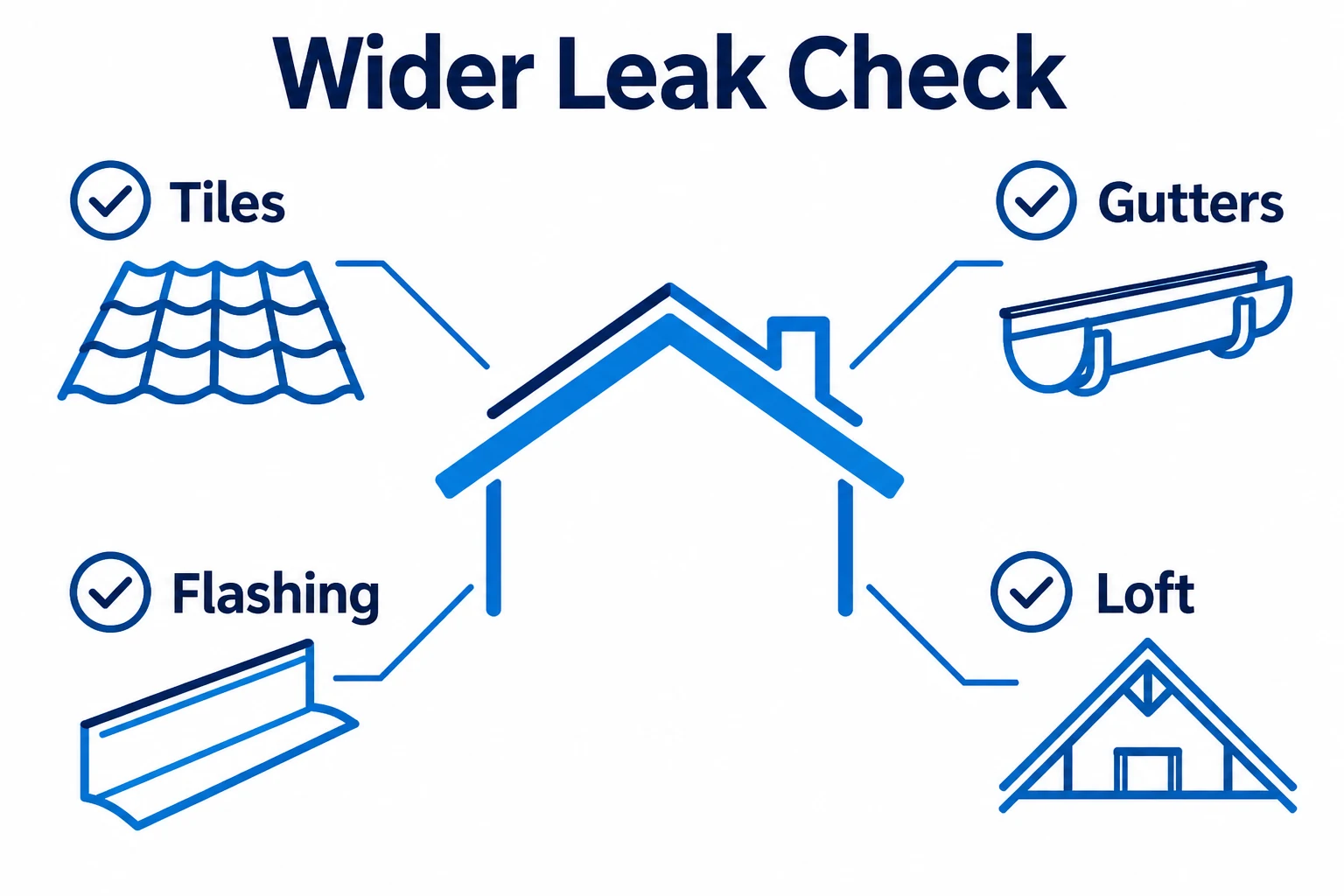
A good leak inspection starts with the symptoms, but it should not stop there. The roofer will want to know when the leak appears, whether it happens in heavy rain only, whether wind direction makes a difference and whether any recent work has been carried out on the roof, gutters, fascia or chimney.
From there, the inspection usually looks at the outside water route. That can include checking whether gutters are clear, whether outlets are flowing, whether joints are sound and whether any sections have dropped. The roof edge should also be checked for damaged tiles, missing mortar, exposed felt, rotten fascia, poor ventilation details and signs of water staining.
Inside the loft, useful clues can include dark marks on rafters, damp felt, wet insulation, daylight through gaps and moisture around the wall plate. These signs can help narrow down the route water is taking. However, they still need to be matched with the outside condition of the roof.
Safe access matters too. Some defects cannot be diagnosed properly from the ground or from a quick look out of a window. Ladders, roof ladders or scaffold may be needed depending on the height, pitch and nature of the problem. The aim is not to make the job bigger than it needs to be. It is to avoid guessing, because guessing can lead to repairs that do not address the real cause.
If the roof has several symptoms, it may help to compare them with wider warning signs your roof may need repair sooner than you think. That broader view can make it easier to decide when a small leak deserves prompt attention.
Why fixing the right cause protects the repair
Roof repairs work best when they deal with the cause of the leak, not only the visible result. Replacing one cracked tile may be useful if that tile is the entry point. But if a blocked gutter is pushing water back under the roof edge, the leak may return even after the tile is changed.
Likewise, resealing a gutter joint may stop dripping down the fascia, but it may not solve a leak if the underlay has failed behind the first course of tiles. The right repair depends on understanding how the whole area is performing. That can involve clearing or realigning gutters, renewing damaged felt at the eaves, replacing broken tiles, improving flashing details or repairing affected timber where needed.
This is also why homeowners should be cautious about very quick conclusions. A clear diagnosis may still be simple, but it should be based on evidence. Water marks, gutter condition, roof covering defects and internal damp all need to be considered together.
The practical benefit is confidence. When the gutter, roof edge and nearby details are checked as a system, the repair has a better chance of solving the problem first time. It also helps identify small issues before they spread into ceilings, insulation, plaster or timber.
- Gutters can make roof leaks harder to diagnose because overflowing or misdirected water may enter at the roof edge and appear somewhere else indoors.
- A damp patch does not always show the exact entry point, since water can track along felt, timber, walls and insulation.
- Blocked outlets, sagging gutters, leaking joints and poor alignment can all imitate roof covering faults.
- A proper inspection should check gutters, roof edges, tiles, felt, flashing and internal loft clues together.
- The most effective repair is the one that fixes the water route, not just the most visible symptom.
Frequently asked questions
Can a blocked gutter really cause a roof leak?
Yes. If water cannot drain away, it can overflow, back up at the roof edge or soak areas that should only handle occasional moisture. Over time, that can expose weaknesses in felt, fascia, tiles or joints.
Why does my ceiling leak appear away from the gutter?
Water can travel along roof felt, timber, insulation or wall surfaces before it becomes visible. The place where you see staining is often the end of the journey, not the start.
Should gutters be checked before replacing roof tiles?
They should usually be checked as part of the same inspection. A broken or slipped tile may be the issue, but gutter overflow can also create or worsen leaks near the eaves.
When should I call a roofer about a suspected gutter related leak?
Call a roofer if damp returns after rain, staining spreads, water overflows regularly, the roof edge looks wet after rainfall or you can see damaged tiles, felt, fascia or flashing.
Need the leak traced properly?
If water is getting in and the cause is not obvious, Roofer Preston can inspect the roof, gutters and roof edges together, then explain the repair options clearly.