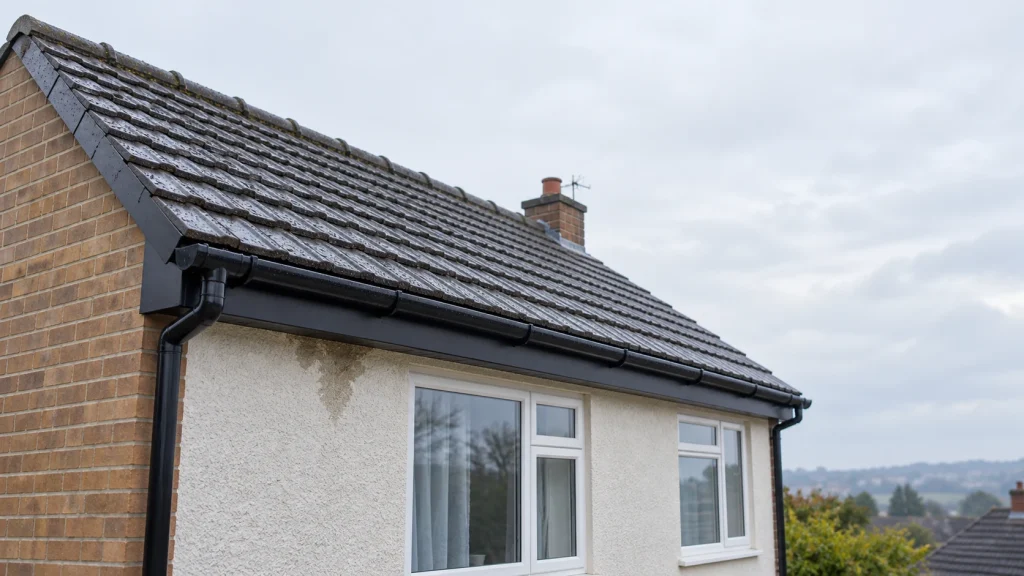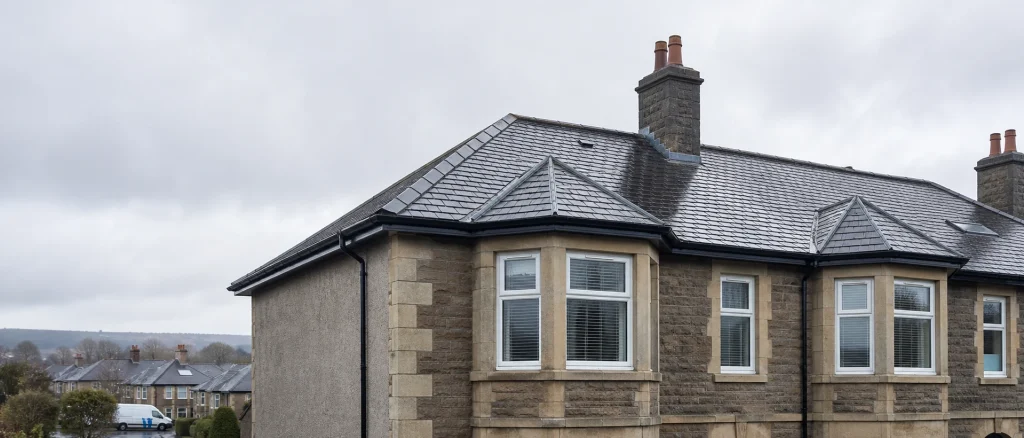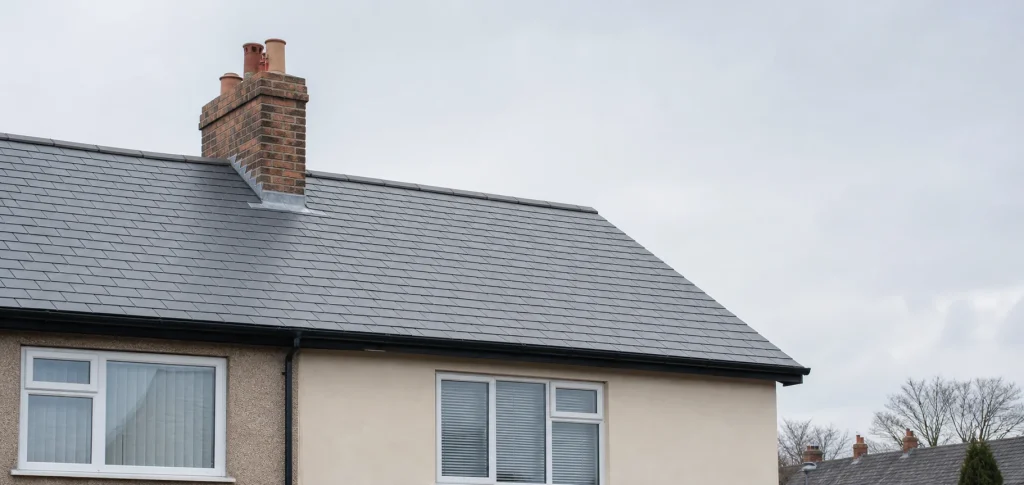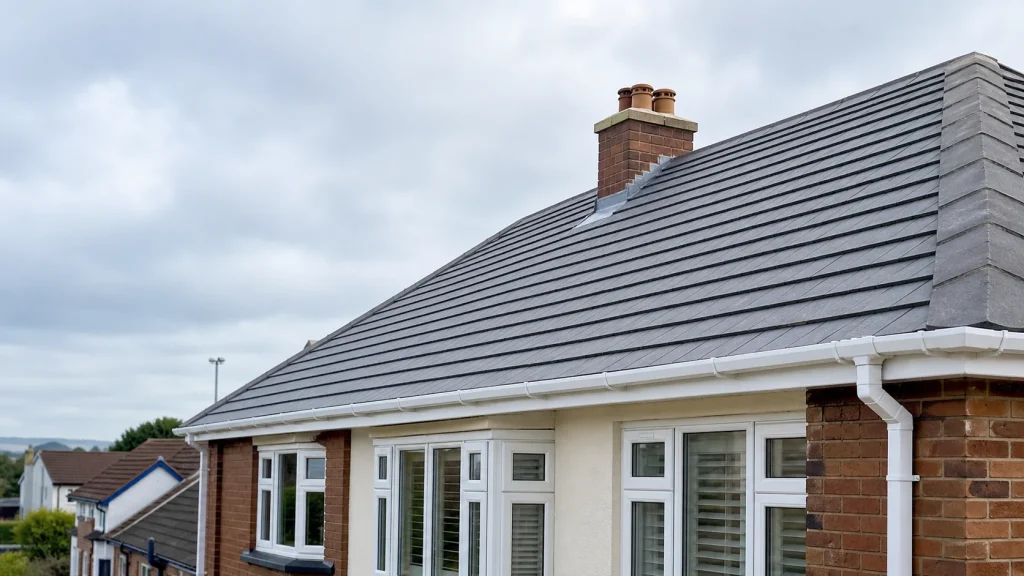
A slipped tile after bad weather is one thing. A roof that needs attention again and again is another.
If leaks, broken tiles, damaged felt or flashing problems keep returning, it may be time to look beyond short-term fixes and consider whether replacement would give your home a more dependable roof.
Why recurring roof repairs should not be ignored
Roof repairs are often the right answer when damage is isolated. A cracked concrete tile, a small area of loose lead flashing or a blocked gutter causing local overflow can usually be dealt with directly.
The picture changes when similar issues keep appearing. For example, if one section of roof is repaired and another soon begins leaking, the problem may be the overall age and condition of the covering rather than a single fault. On pitched slate or tiled roofs, repeated movement can also point to tired fixings, ageing battens, failing underlay or poor ventilation.
Recurring repairs are useful evidence. They show where the roof is weakening, how water is getting in, and whether the structure is coping well. Keeping notes of previous work, photos of damp patches and details of when leaks happen can help a roofer assess whether another repair is sensible or whether a wider solution is more reliable.
Signs a full roof replacement may be the better long-term fix
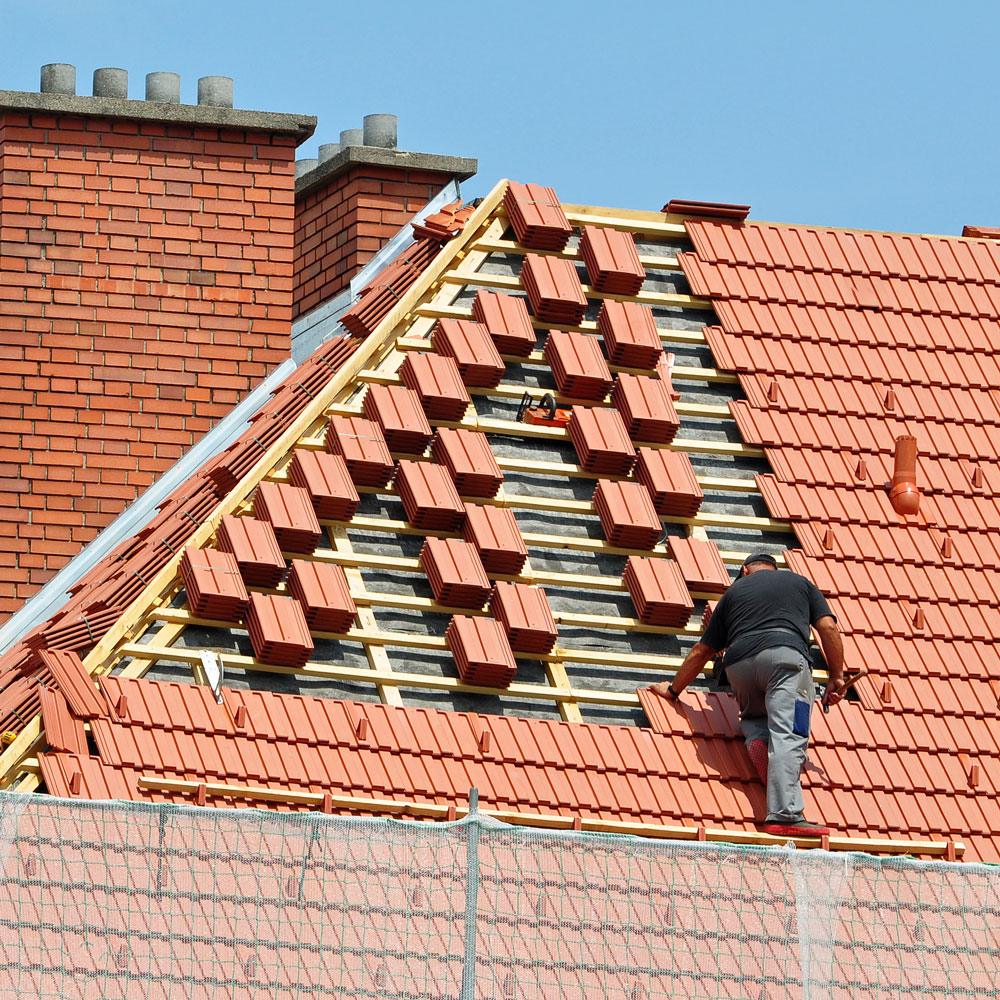
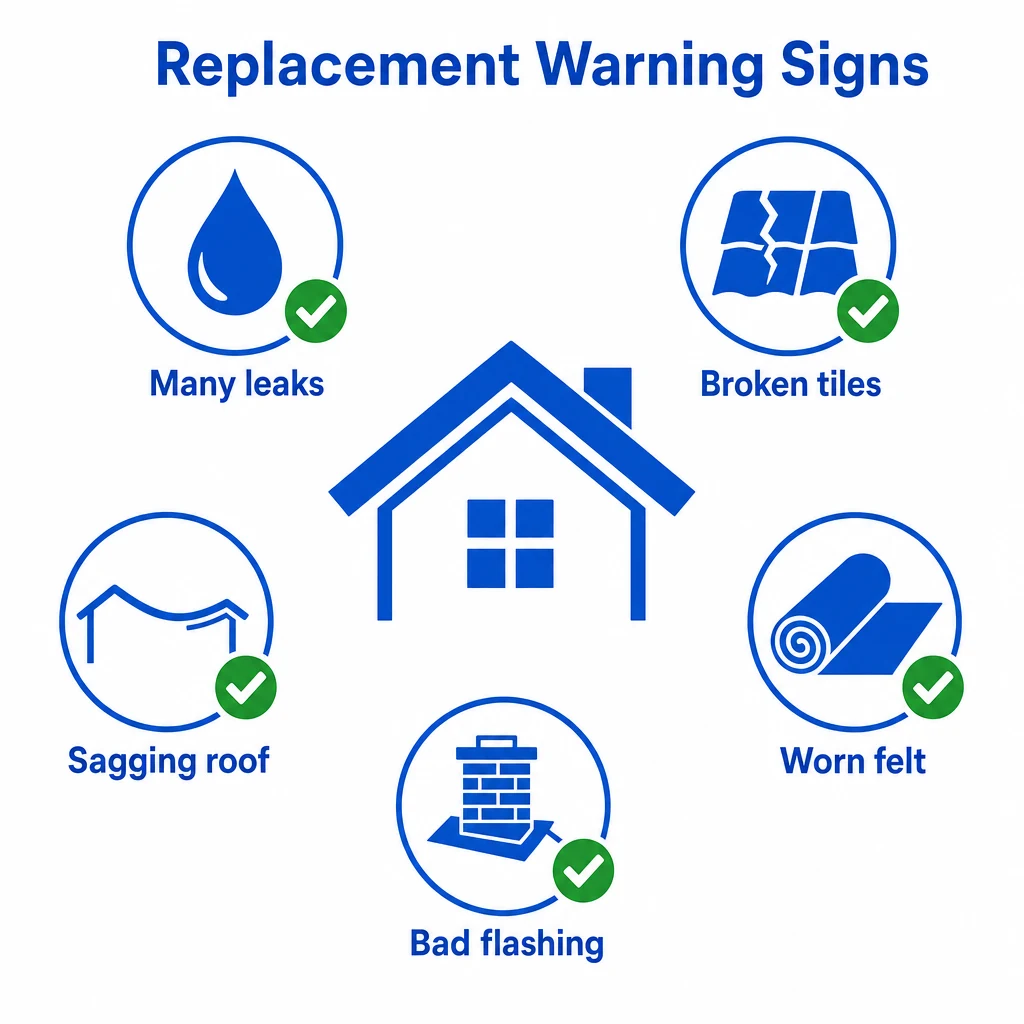
A replacement roof is usually considered when the existing roof covering is no longer performing as a complete system. The roof is made up of tiles or slates, battens, underlay, flashings, ridge details, valleys, gutters and ventilation. If several of these elements are failing together, patch repairs may only deal with the latest symptom.
- Frequent leaks in different places: water entering around chimneys, valleys, roof windows or party walls can suggest the covering is generally tired.
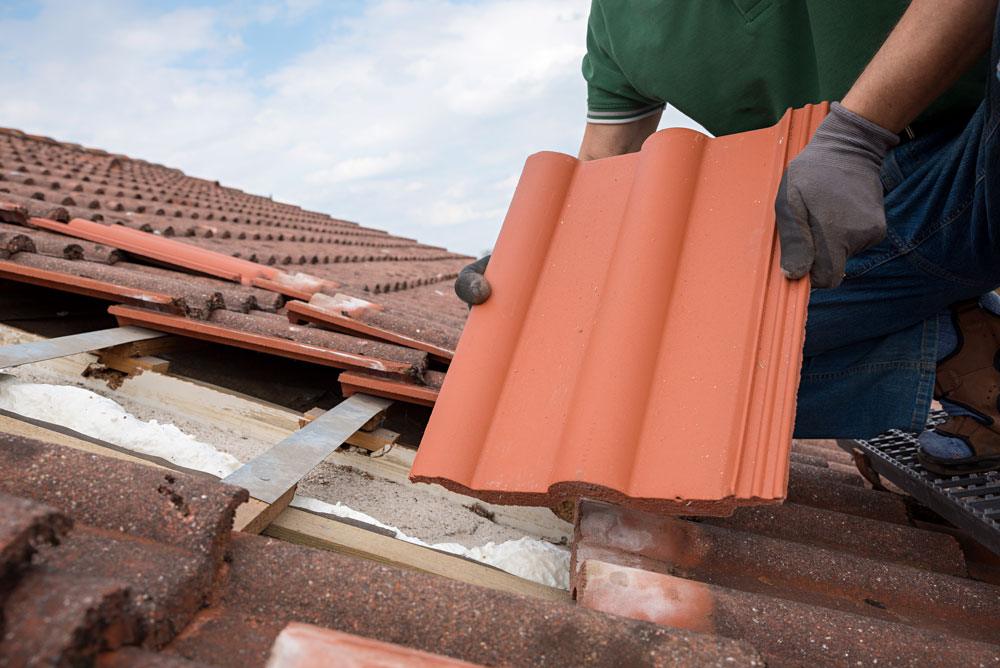
- Widespread cracked, slipped or missing tiles: one or two damaged tiles are normal repair items; repeated tile loss may indicate broader wear.
- Old or brittle roof felt: if underlay has perished, water can track into the loft even when the outer covering looks reasonable from ground level.
- Sagging or uneven roof lines: this should be inspected promptly, as it may involve the roof structure as well as the covering.
- Recurring chimney or flashing leaks: repeated sealing may not solve worn leadwork, poor detailing or movement around the stack.
If several of these apply, it is worth asking for a proper roof assessment rather than booking another small repair automatically. For homeowners comparing options, our guide to roof replacement explains how a new covering can provide a complete, well-planned solution.
When a repair is still the right choice
Not every repeat issue means the whole roof needs replacing. A good roofer should be able to explain when targeted work is enough. Repairs often make sense where the main roof is in sound condition and the problem is clearly limited to one area.
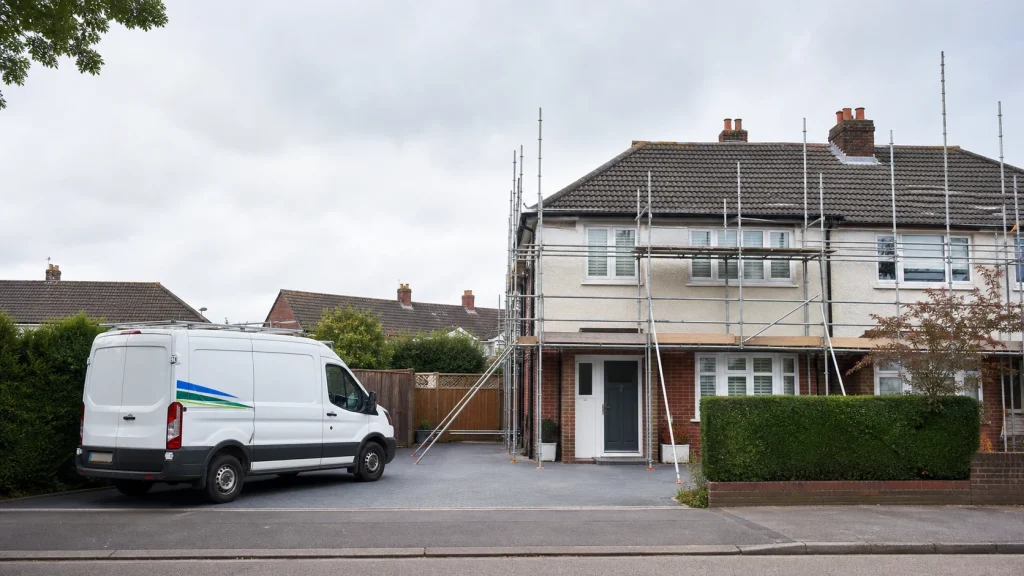
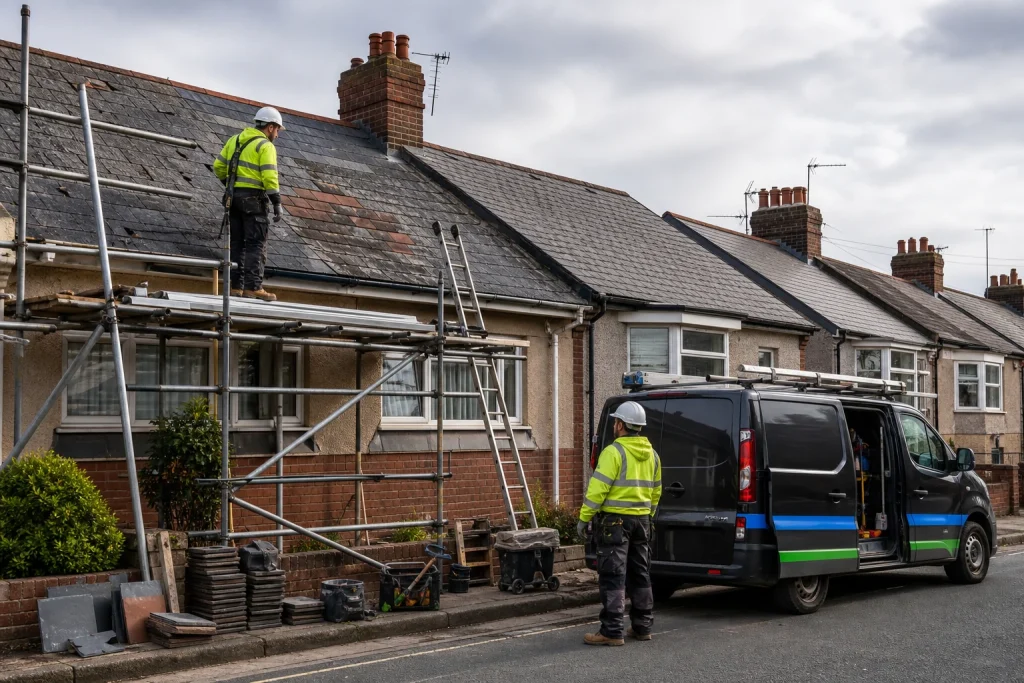
Common examples include replacing a small number of storm-damaged tiles, repointing a ridge section, renewing a short length of flashing, clearing and realigning gutters, or repairing a specific valley detail. On many terraced and semi-detached homes, careful access with ladders or scaffolding allows these jobs to be completed safely and neatly.
The key is diagnosis. A leak that appears on a ceiling may not sit directly below the point where water is entering. Water can travel along felt, rafters or pipework before showing inside. A professional inspection should trace the route of water, check nearby roof details and confirm whether the surrounding materials are sound.
If the issue is isolated, a focused roof repair can protect the property and extend the working life of the roof.
What a roofer should check before recommending replacement
A replacement recommendation should be based on the roof’s condition, not guesswork. A thorough inspection will usually consider both the outside covering and the loft space where accessible.
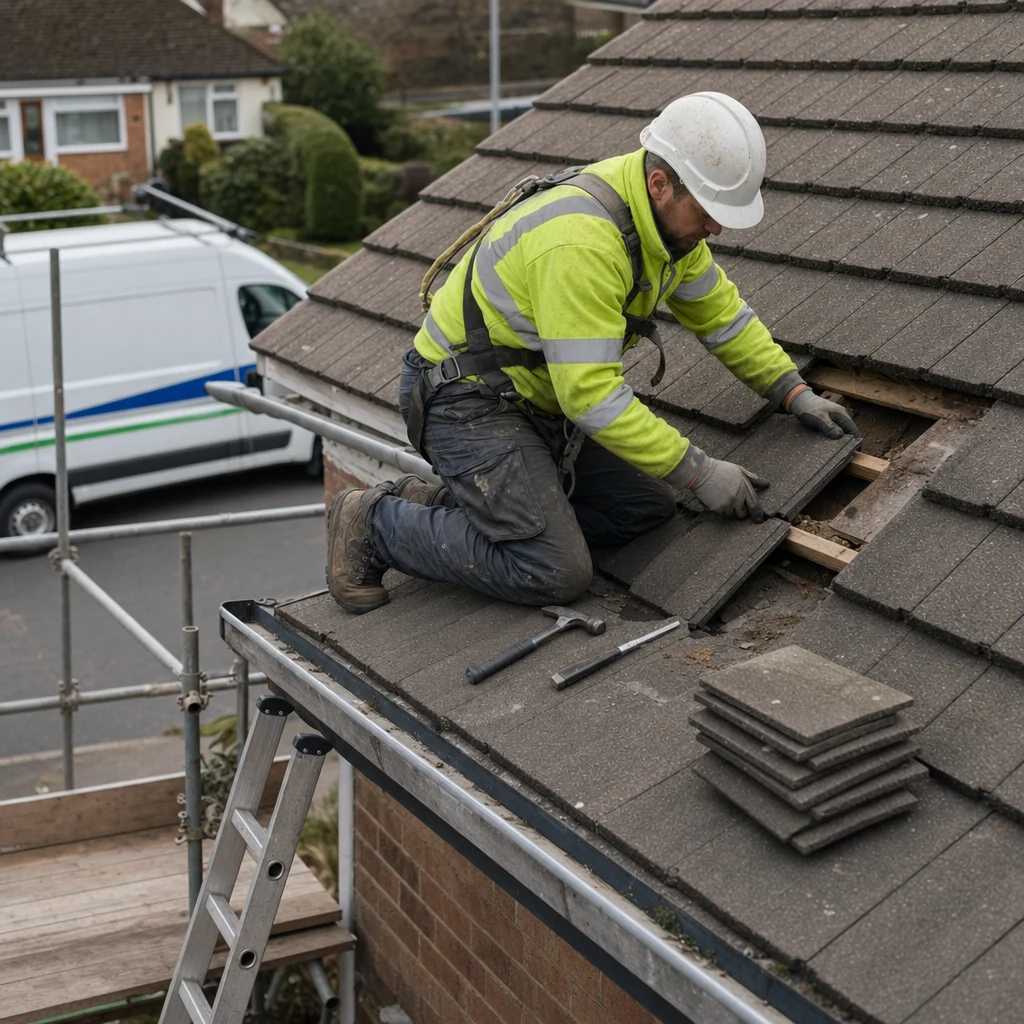
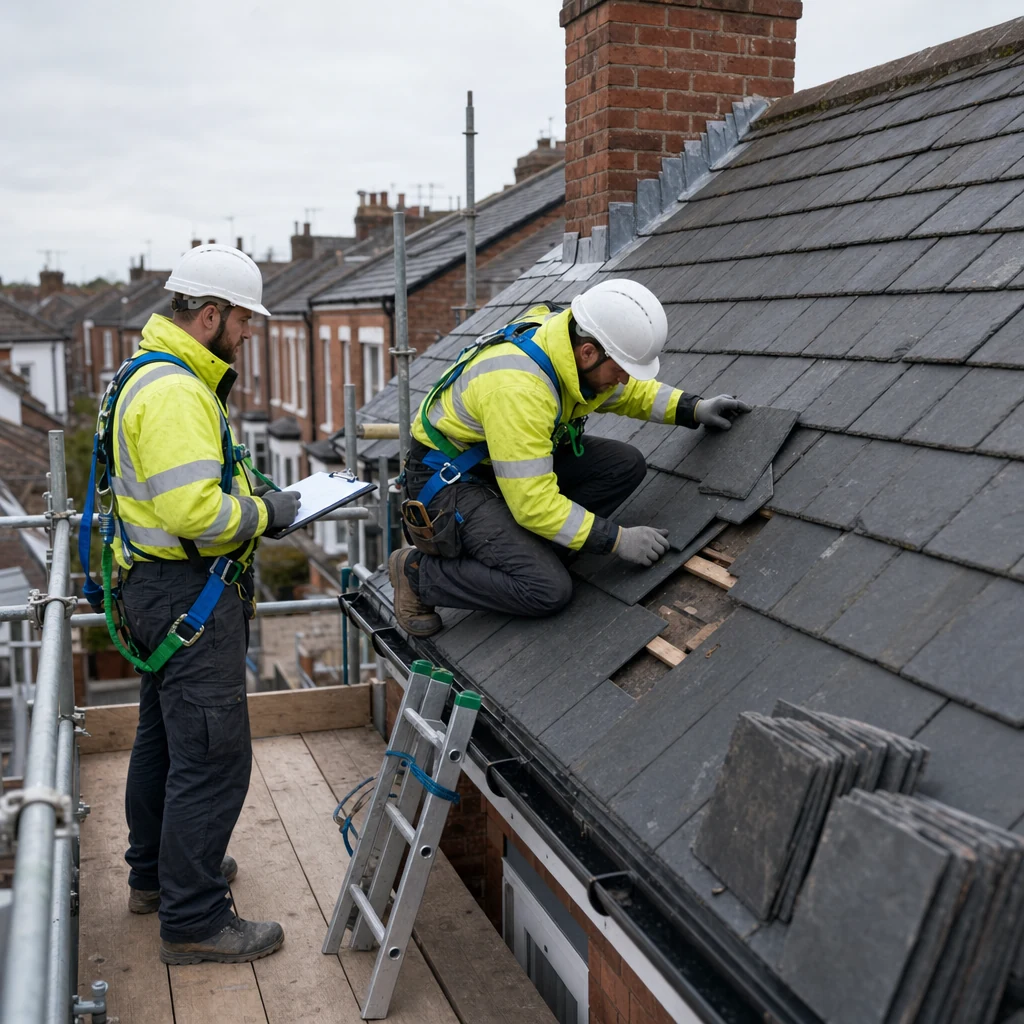
Externally, the roofer should look at tile or slate condition, ridge and verge details, valleys, gutter edges, chimney flashing, leadwork, mortar, fixings and signs of movement. On a safe working site, this may involve ladders, scaffolding, roof ladders and appropriate PPE such as hard hats, harnesses, gloves, boots and hi-vis clothing.
Internally, the loft can reveal staining, daylight through gaps, damp insulation, rotting battens, torn felt or poor airflow. Ventilation matters because trapped moisture can shorten the life of roof timbers and coverings. If replacement is advised, the roofer should explain which elements need renewing and which, if any, can remain.
A clear recommendation might include new underlay, treated battens, replacement tiles or slates, new ridge details, renewed flashing and tidy gutter connections. The aim is not simply to make the roof look new, but to create a weather-resistant system that works together.
How to decide between more repairs and a new roof
The most practical way to decide is to compare confidence, condition and long-term value. If the roof is generally sound, repairs are likely to be the sensible route. If the roof has repeated faults across different areas, replacement may give you a cleaner and more reliable outcome.
Ask yourself a few simple questions:
- Have leaks appeared in more than one room or roof area?
- Have several repairs been needed within a relatively short period?
- Are tiles, slates, felt or flashings showing widespread wear?
- Is the roof difficult to make watertight because materials are brittle or moving?
- Would replacing the covering also improve ventilation, drainage and roof detailing?
A reputable roofer should talk you through both options in plain English. You should understand what a repair would address, what it would not address, and why replacement may be recommended. That balanced advice helps you choose a solution that suits the condition of your home rather than simply reacting to the latest leak.
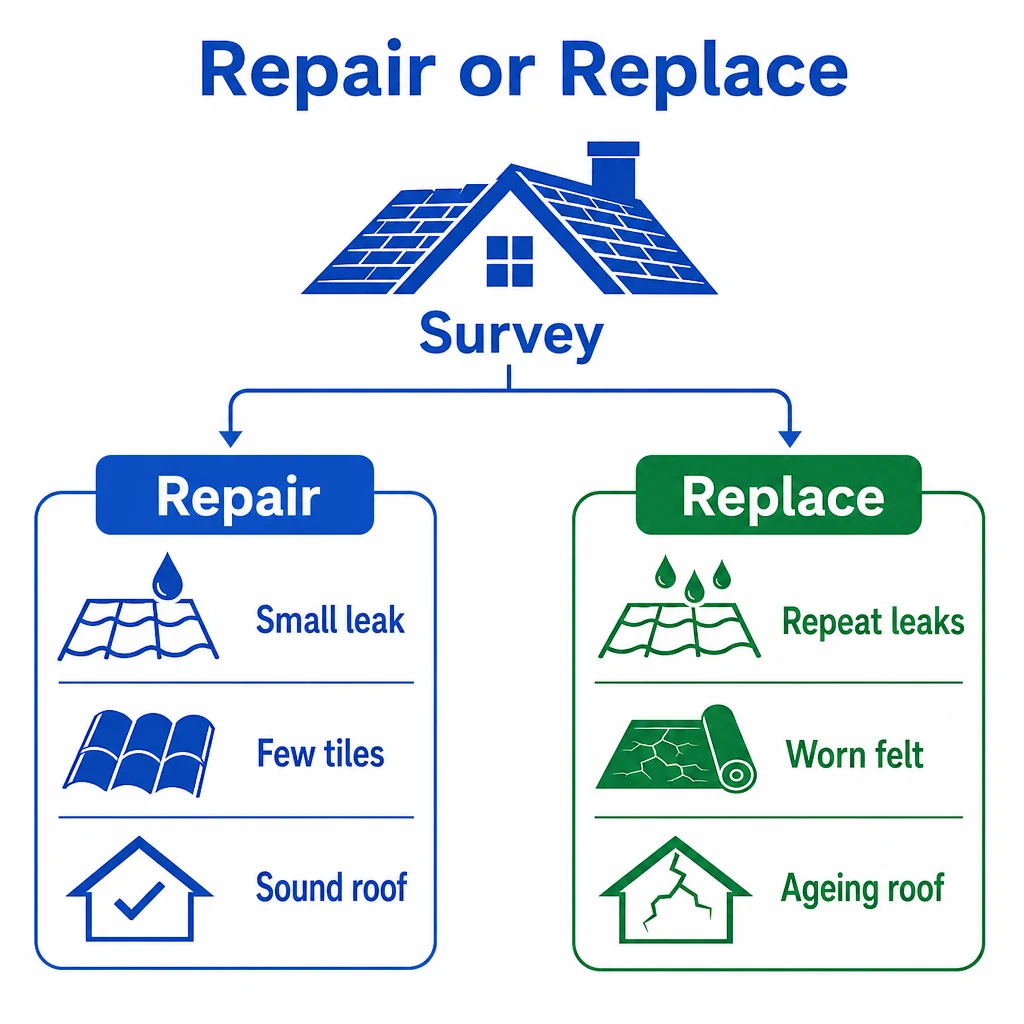
- Repeated leaks in different areas often suggest the whole roof system needs assessing.
- Repairs are ideal for isolated damage where the surrounding roof is still sound.
- Replacement may be the stronger option when tiles, felt, flashings and fixings are failing together.
- A proper inspection should include roof coverings, drainage details and the loft space where accessible.
- Good advice should explain both repair and replacement options clearly.
Frequently asked questions
How do I know if my roof needs replacing rather than repairing?
Look for repeated leaks, widespread slipped or cracked tiles, failing felt, recurring flashing issues or uneven roof lines. A roofer should inspect the whole roof before advising replacement.
Can a roof be replaced in sections?
Sometimes, especially where one roof slope or extension is failing while the rest remains sound. The right approach depends on how the roof is built and where the defects are.
Is a leak always a sign that I need a new roof?
No. Many leaks come from isolated issues such as a broken tile, blocked gutter or small flashing defect. Replacement is more likely when leaks keep returning or appear in several places.
What should I ask before agreeing to roof replacement?
Ask what has failed, what materials will be renewed, how ventilation and flashing will be handled, and whether any structural concerns were found during inspection.
Need clear advice on your roof?
If repairs keep returning, arrange a professional inspection and get a clear view of whether repair or replacement is the right next step.